Back to Basics: Meet the Everyday Americans Learning to Survive in the Wild

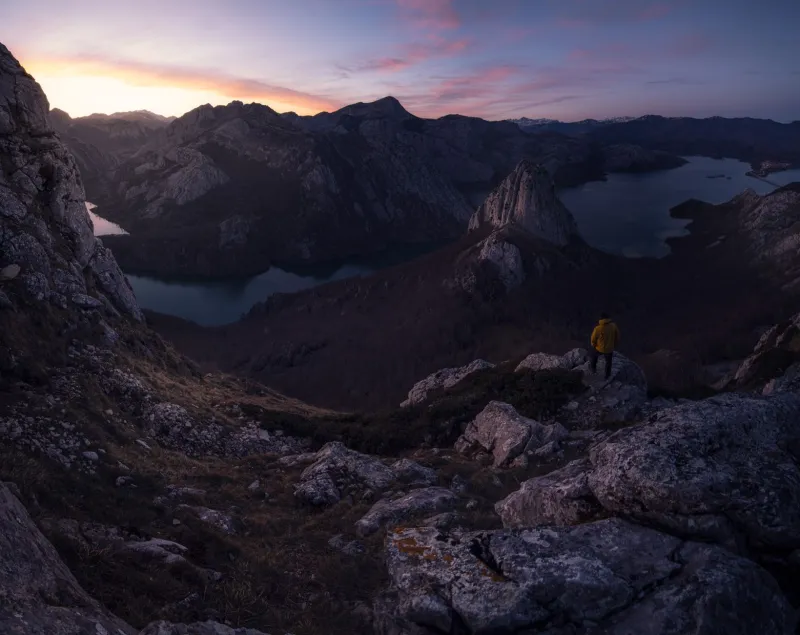
Photo by Photo by Vitaly Gariev on Unsplash on Unsplash
On a Saturday morning in a suburb of Nashville, Tennessee, a group of about fourteen people is gathered in a backyard that backs up to a small patch of woods. There's a dentist, a software developer, a high school art teacher, and a woman who manages logistics for a regional grocery chain. They're all crouched around a small pile of dry leaves and cedar bark, learning how to coax fire from friction.
Nobody here is a prepper in the bunker-and-stockpile sense of the word. Nobody is preparing for a specific apocalypse. They're just people who realized, somewhere between their smartphones and their streaming queues, that they have no idea how to do something humans have done for two hundred thousand years.
"I couldn't start a fire without a lighter," says Derek Osei, the software developer, laughing a little self-consciously. "I thought about that one day and it genuinely bothered me. Like, what else can't I do?"
A Quiet Movement With Serious Momentum
What Derek stumbled into is part of a broader, loosely organized cultural shift that's been building for the better part of a decade. Across the United States, ordinary people — not survivalists, not military veterans, not professional outdoorspeople — are deliberately learning wilderness survival skills. They're doing it through informal meetups organized on private Facebook groups and Discord servers, through weekend workshops hosted by small-batch instructors, and through backyard experiments guided by YouTube channels, podcasts, and a growing library of field guides.
The numbers are hard to pin down precisely, because the movement is deliberately low-key. But instructors who run survival and bushcraft courses across the country report a significant uptick in interest since around 2020, with demand continuing to grow even as pandemic anxiety has faded.
"The pandemic was a catalyst, but it wasn't the whole story," says Renata Voss, who runs a wilderness skills school out of western North Carolina and has been teaching for over twelve years. "People were already feeling disconnected before that. COVID just made it impossible to ignore."
What They're Actually Learning
The skill sets vary by group and instructor, but there's a common core that most practitioners gravitate toward:
- Fire-starting — both friction-based (bow drill, hand drill) and spark-based methods
- Water sourcing and purification — identifying natural water sources, understanding contamination risks, building improvised filters
- Navigation — using a compass and topographic maps without relying on GPS
- Shelter construction — building debris huts, lean-tos, and other improvised structures from natural materials
- Foraging basics — identifying edible and medicinal plants native to their region
- Tracking and wildlife awareness — reading animal signs, understanding predator behavior
This isn't the stuff of extreme survivalism TV. It's methodical, patient, and often deeply unglamorous. Learning to hand-drill a fire can take months of consistent practice. Getting comfortable with plant identification requires building a relationship with a specific landscape over time.
"People come in expecting it to be like a video game," says Marcus Delray, a former wildland firefighter who now teaches primitive skills workshops in the Pacific Northwest. "And then they realize it's more like learning a language. You have to keep showing up."
The Psychology Behind the Pull
So what's actually driving educated, comfortable, thoroughly modern Americans to spend their weekends learning to make cordage from plant fibers?
The answers are as varied as the practitioners themselves, but a few themes keep coming up.
Self-reliance anxiety is a big one. There's a widespread, low-grade unease among Americans about how dependent they've become on systems they don't control — power grids, supply chains, digital infrastructure. Learning survival skills is, for many people, a way of quietly hedging against that vulnerability without going full off-grid.
Disconnection from nature is another. Multiple practitioners describe a feeling of alienation from the natural world that they couldn't quite name until they started spending time outdoors with intention. The act of learning to read a landscape — to notice which plants grow near water, which bird calls signal a predator — creates a kind of fluency that most people raised in suburbs never develop.
And then there's something harder to articulate but almost universally mentioned: the satisfaction of genuine competence. In a world where most professional skills are abstract and digital, there's something viscerally rewarding about learning to do something real.
"I spend all day manipulating data," says Osei. "When I start a fire with a bow drill for the first time, it's just... different. It's in the physical world. It actually happened."
The Secretive Side of the Scene
One of the more interesting aspects of this subculture is its relative reluctance to seek mainstream attention. Many groups operate through invite-only networks, and practitioners are often cautious about publicizing the locations of their meetups or foraging spots.
Some of this is practical — overharvested foraging spots or crowded practice areas can quickly lose their value. But there's also a cultural dimension. Many participants are drawn to the quietness of the community, the sense that they're engaged in something outside the attention economy.
"We're not doing this for Instagram," says Voss. "A lot of people are specifically here because they're tired of performing their life online. This is for them."
What It's Changing
For practitioners who've been at it for a year or more, the effects extend well beyond the skills themselves. Multiple people describe a shifted relationship with the outdoors — less recreational, more relational. They notice more. They move differently in wild spaces. They feel less like visitors and more like participants.
Delray sees this transformation regularly in his students. "They come in treating the forest like a backdrop. After a while, they start treating it like a place they belong. That's the real shift."
For a country that's spent the last century systematically moving its population away from direct engagement with the land, that shift feels like something worth paying attention to. Whether it's a passing trend or the early edge of something larger, the people crouched over fire boards in Nashville backyards are asking a question that's hard to dismiss: What do I actually know how to do?
If you've never asked yourself that, it might be time to start.