The Adventure That Was Already Waiting: Why Your Next Great Trip Is Closer Than You Think

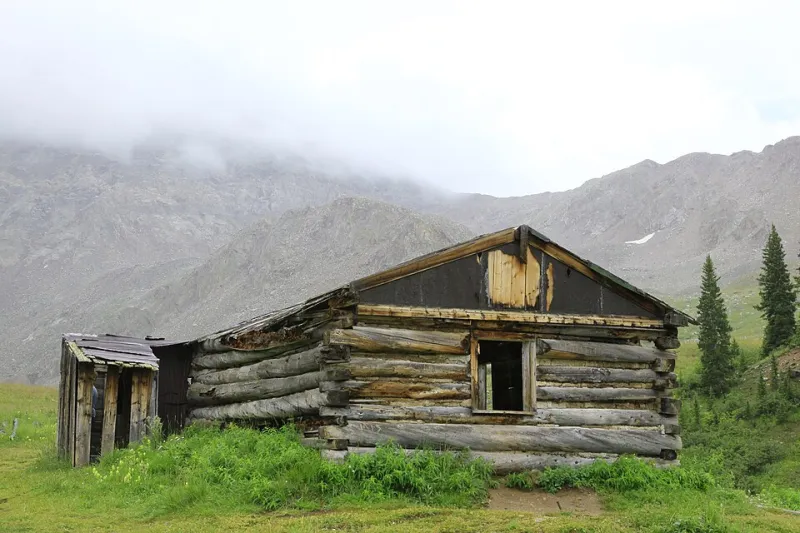
Photo: Jeremy Harbeck, Public domain, via Wikimedia Commons
Let me say something that might ruffle a few feathers in the travel community: the idea that real adventure requires a long-haul flight and a currency exchange is, honestly, a little lazy.
I get it. There's a cultural script around travel that equates distance with worthiness. The farther you go, the more adventurous you are. The more exotic the destination, the more impressive the story. Social media has turbocharged this belief until it's practically calcified into fact. But here's the thing — it's not fact. It's marketing.
The truth is that genuine adventure is defined by mindset, not mileage. And once you internalize that, the world gets a lot bigger without you ever having to leave your time zone.
What a Microadventure Actually Is
The term "microadventure" has been floating around outdoor circles for a while now, popularized in part by British adventurer Alastair Humphreys, who proved you could have a legitimately transformative experience by simply sleeping on a hillside outside London. The concept translates perfectly to the American context, where we're sitting on some of the most diverse and underexplored terrain on the planet.
A microadventure isn't a lesser adventure. It's a deliberately local one. It might mean hiking a trail in your county you've driven past for years. It might mean kayaking a stretch of river you didn't know was navigable. It might mean camping in a state forest 45 minutes from your apartment and watching the Milky Way appear over trees you've never stood beneath before.
The adrenaline, the wonder, the disorientation of being somewhere new — none of that requires a boarding pass.
The Familiarity Trap
Here's the psychological quirk that makes local exploration so underrated: we tend to devalue what's accessible. If something is easy to reach, we assume it's not worth reaching for. We save our curiosity for places that feel "worth" the effort of a big trip.
But talk to any seasoned adventurer and they'll tell you that some of their most vivid memories were forged close to home. Sarah, a trail runner from Asheville, North Carolina, spent three years planning a trek in Patagonia while barely touching the hundreds of miles of trails in the Pisgah National Forest behind her house. When she finally explored them seriously — really explored them, with intention and curiosity — she found waterfalls she'd never seen referenced online, ridge lines that took her breath away, and a sense of discovery she'd been chasing on the other side of the world.
"I kept thinking, how did I not know this was here?" she told me. "I drove past the trailhead probably twice a week."
That's the familiarity trap. We stop seeing what's close because we've decided it can't be surprising.
The Case for Driving Distance Discovery
America is genuinely absurd in terms of geographic variety. Within a single state, you can move from swamp to mountain to desert in a day. The country contains 63 national parks, over 6,000 state parks, thousands of miles of navigable rivers, and an enormous network of public land that most people never set foot on.
A study from the Outdoor Foundation found that a significant portion of Americans who describe themselves as "not outdoorsy" live within 30 minutes of publicly accessible natural space. The barrier isn't access — it's imagination.
That's where the microadventure mindset comes in. When you start treating nearby places with the same curiosity you'd bring to a trip abroad — researching the history, studying the terrain, going without a rigid itinerary — the experience changes entirely.
Try this: pick a town within two hours of where you live that you've never visited. Don't research restaurants or hotels. Instead, look up what the land looked like before it was developed, find out if there are any trails or waterways nearby, and just go. Give yourself a full day with no agenda beyond showing up and paying attention.
The odds are good that you'll come home with a story.
Redefining What "Getting Lost" Means
One of the things people love most about international travel is the feeling of being genuinely disoriented — of not knowing where you are, not speaking the language, not having a mental map to fall back on. That feeling is addictive, and it's real.
But disorientation is available locally too, if you're willing to pursue it. Leave the GPS at home. Take a trail you've never researched. Paddle a river without knowing exactly where it bends. Camp somewhere without cell service and spend an evening with just a fire and your thoughts.
The brain doesn't care whether you're lost in the Rockies or lost in the state forest three counties over. The neurological experience of genuine uncertainty, of navigating new terrain, of figuring things out without a safety net — that's the same wherever you are.
Budget-Friendly Doesn't Mean Experience-Poor
There's also the financial reality worth naming directly. International travel is expensive. Not prohibitively so for everyone, but genuinely out of reach for a lot of Americans who still crave adventure. The microadventure framework democratizes exploration in a way that feels genuinely meaningful.
A tank of gas, a borrowed tent, and a free permit for a state park can deliver an experience that rivals — and sometimes surpasses — a trip that cost ten times as much. The memories aren't proportional to the price tag.
Start Small, Go Often
The philosophy behind microadventures isn't about settling for less. It's about adventuring more frequently. Instead of one big international trip per year that you spend months anticipating and weeks recovering from, imagine a dozen smaller expeditions scattered throughout the year — each one feeding your curiosity, sharpening your outdoor skills, and reminding you that the world is weird and wild and worth exploring.
Your backyard is bigger than you think. The adventure was already there. You just have to decide to go looking.