After Dark: Why America's Dark Sky Parks Are the Adventure Frontier You've Been Ignoring
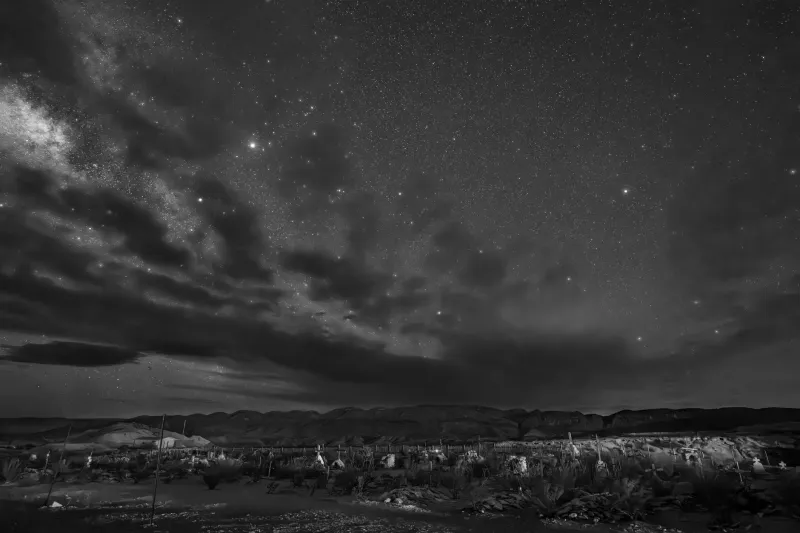
You've probably planned a trip around a summit. Maybe a river. A coastline, a canyon, a ridge line that looks good in photos. But when's the last time you planned a trip around nothing — no trail, no peak, no feature at all — just darkness?
That's the pitch behind America's dark sky parks, and it sounds almost too simple until you're actually standing in one at 2 a.m., watching the Milky Way pour across the sky like something spilled from a dream. Then it makes complete sense.
The International Dark-Sky Association (IDA) has been designating protected areas since the early 2000s, and the list has grown steadily into a loose but powerful network of places where light pollution is actively managed and the night sky is treated as a natural resource worth protecting. There are now over 200 designated dark sky places across the US, ranging from massive national parks to small municipal reserves tucked into corners of states you might not have visited in years. And the adventure community? It's barely scratched the surface.
The Problem Nobody Talks About at the Trailhead
Here's a stat that tends to stop people cold: roughly 99% of Americans live under light-polluted skies. About a third of us have never seen the Milky Way with our own eyes. Not once. We've grown up under an orange glow that blurs out the cosmos, and most of us have just... accepted it.
Light pollution isn't dramatic. It doesn't flood a valley or knock down a tree. It just quietly dims things, night after night, until the sky above a city looks like a flat gray ceiling and nobody remembers what used to be up there. That slow erasure is exactly what makes dark sky preservation easy to overlook — and exactly what makes stumbling into a genuinely dark sky feel like a revelation.
"The first time I drove out to a dark sky site, I pulled over on the side of the road because I thought something was wrong with my vision," says Marcus Hale, an amateur astronomer based in Phoenix who now leads informal stargazing meetups at designated sites across the Southwest. "It was just stars. More stars than I'd ever seen. I sat on the hood of my truck for three hours."
That reaction — disorientation followed by awe — is almost universal among first-timers. And it's the kind of experience that's becoming harder and harder to stumble into accidentally, which is exactly why intentional dark sky destinations matter.
Lesser-Known Spots Worth the Drive
Most people think of dark skies and immediately picture Big Bend or Death Valley. Both are genuinely spectacular, and both are worth the trip. But the more interesting story right now is happening in places that don't make the highlight reels.
Headlands Dark Sky Park in Michigan sits at the tip of the Lower Peninsula, surrounded by Lake Michigan and Lake Huron on three sides. The water acts as a natural barrier against light pollution from nearby towns, and the park keeps its own facilities dark after sunset. It's free, accessible year-round, and on a clear night in winter, you can see the aurora borealis dancing over the lake. Not many people associate Michigan with world-class stargazing. That's your advantage.
Enchanted Rock State Natural Area in Texas has been a dark sky sanctuary since 2014. The granite dome at its center — a massive pink batholithic formation — becomes a natural observatory platform after the day hikers clear out. Bring a sleeping pad, claim a spot on the rock, and look up. The Hill Country's relative flatness and low population density mean the horizon in every direction stays dark.
Natural Bridges National Monument in Utah was actually the first area ever designated as an International Dark Sky Park, back in 2007. It sits in the heart of Bears Ears country, far enough from any major city that the sky overhead is about as dark as it gets in the continental US. The Bortle scale — the standard measure for sky darkness — rates Natural Bridges at a 2, which is about as close to pristine as you'll find outside of remote wilderness.
This Is Still an Adventure, Just a Different Kind
Something worth saying out loud: dark sky exploration is genuinely physical. It's not just lying in a field and looking up (though that's a legitimate option). The best experiences involve hiking to remote viewpoints after sunset, navigating by red-light headlamp through terrain you scouted during the day, timing your movements around moonrise and moonset, and staying alert in conditions that most casual visitors never encounter.
Night hiking has its own skill set. Wildlife behaves differently after dark. Temperature drops can be steep and fast. Navigation that feels automatic in daylight requires real attention in the dark. Seasoned adventurers often find that a night in a dark sky park tests them in ways a standard daytime hike doesn't — and that the payoff is proportionally bigger.
"There's something about the scale of it," says Renata Cruz, a landscape photographer who's spent the last four years documenting dark sky sites across the American West. "During the day, a canyon is impressive. At night, with the stars reflected in a still pool at the bottom, it becomes something else entirely. You feel genuinely small, and that feeling — that's what people are chasing when they travel, right? Perspective."
How to Actually Do This
Getting started with dark sky travel doesn't require expensive gear or deep astronomical knowledge. A few basics go a long way.
Check the moon calendar first. A full moon washes out the faintest stars and the Milky Way core. New moon nights are ideal. Plan your trip around the lunar cycle the same way a surfer checks the tide charts.
Download a stargazing app. SkySafari, Stellarium, and Sky Map are all solid options. They help you identify what you're seeing and orient yourself quickly. Avoid using your phone's white screen — switch to red-light mode to protect your night vision.
Give your eyes time. Full dark adaptation takes 20 to 30 minutes. Don't rush it. Sit still, let your pupils adjust, and watch the sky slowly reveal itself in layers.
Dress warmer than you think you need to. Clear skies mean no cloud cover, which means heat escapes fast. Even in summer, desert nights can drop into the 50s or lower. Bring layers.
And maybe most importantly: go somewhere you've never been. The dark sky network spans 48 states. There is almost certainly a designated site within a few hours of wherever you're reading this. The adventure is already out there, waiting for the lights to go out.
The Frontier Is Overhead
Adventure has always been about finding edges — the places where the familiar drops away and something larger takes over. For most of human history, the night sky was the most accessible edge there was. Every person who ever lived looked up at the same stars and felt the same vertigo of scale.
We nearly lost that. The good news is we haven't lost it completely. The dark sky movement is growing, the designated sites are multiplying, and the people showing up to experience them are discovering something that can't be replicated on a screen or summarized in a caption.
Some frontiers are thousands of feet up. Some are thousands of miles away. This one is directly above you, and it comes out every night.
You just have to go somewhere dark enough to see it.