The Trail Went Viral and Now It's Dying: What Outdoor Lovers Owe the Wild
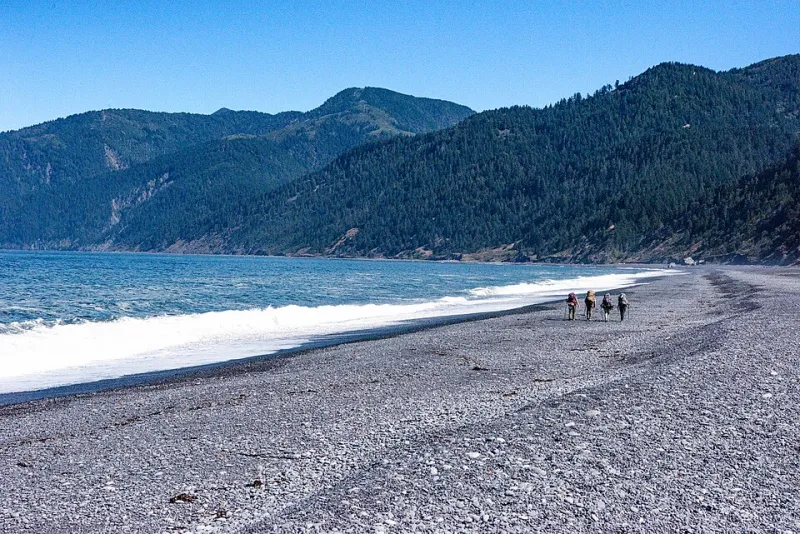
Photo: blmcalifornia, Public domain, via Wikimedia Commons
Somewhere in southern Utah, there's a slot canyon that used to take a two-mile hike to reach. No signs. No designated parking. Just a dirt road, a dry wash, and — if you knew what you were looking for — a crack in the earth that opened into something otherworldly.
Then someone posted a photo. It got a hundred thousand likes. Then a million. Within eighteen months, the access road had been widened twice, a portable toilet facility was installed, and rangers were clocking 400 visitors on a single Saturday. The cryptobiotic soil crust — the fragile, living skin of the desert that takes decades to form — had been stomped flat in every direction.
This story isn't unique. It's playing out across the American wilderness right now, from the lava fields of Hawaii to the alpine meadows of the North Cascades, and it's forcing a reckoning that the outdoor community can no longer avoid.
The Algorithm Doesn't Care About Leave No Trace
Social media platforms are essentially discovery engines, and they're extraordinarily good at their jobs. A stunning landscape photo — properly lit, perfectly composed, tagged with a location — can reach millions of people who've never heard of that place. For creators, that's reach. For the landscape, it's often a slow catastrophe.
"We've seen visitation at certain sites increase by 300 to 400 percent in the span of two or three years," says Kevin Driscoll, a wilderness ranger who's worked in the Intermountain West for over a decade. "The infrastructure, the ecosystems, the wildlife — none of it scales like that. The land doesn't get bigger just because more people want to stand on it."
The damage is measurable and, in many cases, irreversible on any human timescale. Trampled vegetation. Eroded trails that widen year over year. Waste — human and otherwise — contaminating water sources. Wildlife pushed out of critical habitat corridors by the constant presence of humans. And cultural and archaeological sites disturbed or vandalized by visitors who had no idea what they were looking at.
The painful irony? Most of the people causing this damage love the outdoors. They're not indifferent. They're just following the algorithm straight to somewhere fragile.
The Overtourism Trap
The term "overtourism" gets thrown around a lot in the context of European cities — Venice, Barcelona, Dubrovnik. But it's just as real on a backcountry trail in Colorado or a remote beach on Lake Superior.
Conservation ecologist Dr. Priya Nair, who studies human impact on wilderness corridors in the Rocky Mountain region, puts it bluntly: "There's a threshold for every ecosystem. Once you cross it, recovery isn't guaranteed. We're past that threshold in a lot of places people think of as pristine wilderness."
The problem compounds when you factor in what researchers call the "honeypot effect" — the tendency of viral destinations to draw visitors who concentrate in a tiny area, leaving adjacent wilderness untouched. Ninety percent of the damage gets done in ten percent of the land because that's where the photos come from.
Park rangers and land managers are overwhelmed. The Forest Service alone manages 193 million acres with a workforce that's been chronically underfunded for years. Permit systems help at some sites, but they create their own friction, and plenty of popular spots have no permit system at all.
What Responsible Explorers Actually Do
Here's the good news: if you're reading this, you're already part of the solution — or you can be. The outdoor community has real power to shift how this plays out, and it starts with a few deliberate choices.
Drop the geotag. This is the single most impactful thing photographers and content creators can do. Share the beauty. Describe the experience. But consider leaving the precise location out of it. "In the desert Southwest" is enough. The people who are genuinely ready to find a place will find it. The casual scroll-and-go crowd won't.
Seek out the unglamorous. The most biodiverse, historically rich, and genuinely awe-inspiring places in America are often not the ones with a million hashtags. Talk to local outfitters, check with ranger districts, and dig into lesser-known corners of public land. Some of the most profound outdoor experiences available in this country are a short drive from a major city and almost entirely unknown.
Master the off-season. Many of the most overcrowded destinations are only overcrowded in summer. The Smokies in November, the Oregon coast in February, the desert in early spring — these are different worlds. Quieter, wilder, and often more beautiful.
Actually support the land. Buy an America the Beautiful pass. Donate to trail maintenance nonprofits. Volunteer for a local conservation corps. The outdoor industry generates billions of dollars annually; a tiny fraction of that filters back to the agencies and organizations doing the actual work of stewardship.
Go slow, go deep. The viral photo economy rewards novelty — a new place every weekend, a new summit, a new landmark. But some of the richest adventure experiences come from returning to the same piece of land across seasons, learning its rhythms, building a real relationship with a place. That kind of connection also tends to make you a better, more careful visitor.
The Conversation We Need to Have
There's a tension at the heart of adventure content — including content like this — that deserves honesty. Inspiring people to explore wild places is genuinely good. Getting outside changes people. It builds empathy for the natural world, which ultimately translates into conservation values and political will.
But inspiration without responsibility is just recruitment for the problem.
"I've had to completely rethink how I talk about places I love," says outdoor photographer and guide Simone Okafor, who runs multi-day wilderness trips out of Asheville, North Carolina. "I used to think sharing was always a gift. Now I think about it more like — is this place ready for what sharing it will bring?"
That's the question every adventurer with a platform — even a small one — needs to sit with. The wild places that shaped us, that reset our nervous systems and reminded us what it feels like to be alive — they need something back from us.
Not just our wonder. Our restraint.