Paying to Play: How the Cost of Getting There Is Pricing People Out of America's Wild Spaces
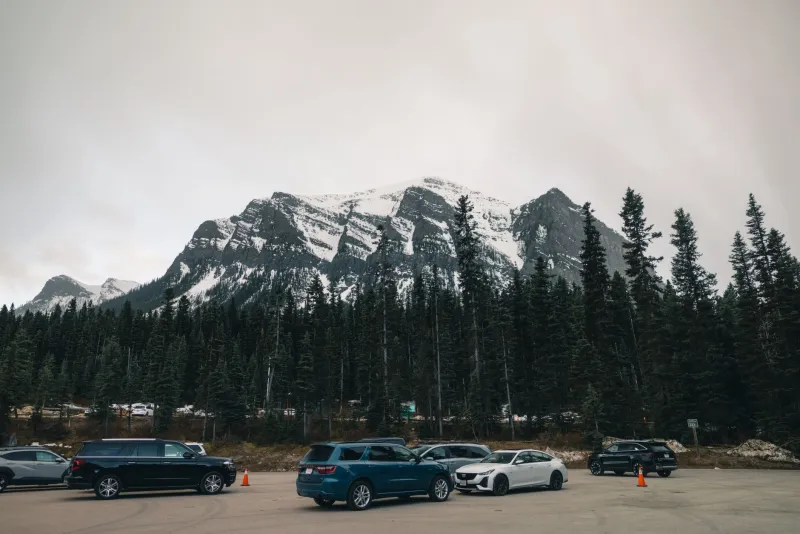
There's a particular kind of frustration that hits when you've finally scored a permit for a bucket-list trail — one of those spots that makes your chest tight just looking at the photos — and then you start doing the actual math. Gas to the trailhead. Overnight parking fees. A mandatory shuttle because private vehicles aren't allowed past mile marker three. A required wilderness guide because the land management agency changed its rules last spring. Suddenly you're looking at $400 before you've laced up a single boot.
Welcome to the adventure tax.
It's not an official line item anywhere. No agency is calling it that. But spend five minutes in any serious hiking forum or overlanding Facebook group and you'll hear the same story repeated in a dozen different ways: getting to the experience has started costing more than the experience itself.
The Numbers Don't Lie
Let's talk specifics, because the problem gets real fast when you move past the abstract.
Fuel costs for a round trip to many remote Western trailheads — think the Escalante Canyons in Utah, the Boundary Waters in Minnesota, or the roadless corners of Olympic National Park in Washington — can run $80 to $200 depending on where you're starting from and what you're driving. Tack on mandatory shuttle services, which have proliferated across popular corridors as land managers try to control vehicle congestion, and you're adding another $30 to $80 per person. Parking at trailheads in high-demand areas? That's crept up to $35 a day in some spots. And if you're heading into terrain that now requires a permitted guide — a growing requirement in fragile or technically demanding zones — you could be looking at $150 to $500 or more per person, per day.
A 2023 survey by the Outdoor Recreation Roundtable found that cost was the number one barrier preventing Americans from participating in outdoor recreation — outranking time constraints, lack of gear, and even physical fitness concerns. That's a significant shift from even a decade ago, when the dominant narrative was that public lands were the great equalizer: free, open, and democratic by design.
They still are, technically. But the infrastructure required to reach them increasingly is not.
How We Got Here
The explosion in outdoor recreation during and after the pandemic is part of the story. Record visitation numbers hammered fragile ecosystems and overwhelmed infrastructure that was already underfunded. Land managers responded with timed entry systems, mandatory reservations, shuttle-only corridors, and in some cases, guided-access requirements. These aren't entirely unreasonable responses to a real problem.
But the knock-on effect has been a slow repricing of wilderness access. Shuttle concessions, often operated by private companies under federal contracts, have raised rates as demand spiked. Guide services, knowing they now hold a mandatory key to certain areas, have adjusted pricing accordingly. And fuel costs — volatile and consistently punishing for anyone driving distance to remote areas — have made spontaneous adventure feel like a financial risk.
The result is a landscape where the people most likely to visit America's most spectacular places are those who can absorb those costs without much calculation. Which is to say: not everyone.
Who Gets Left Behind
Ask Marcus Tillman, a 34-year-old teacher from Albuquerque, New Mexico, and he'll tell you the math stopped working for him around 2022. "I used to just throw my pack in the truck and go," he says. "Now I'm building spreadsheets before I can even decide if a trip is worth it. Half the time I talk myself out of it before I even get to the fun part."
Tillman isn't alone. Across hiking and adventure communities online, the conversation has shifted from where should I go to can I afford to go. Lower-income explorers, people without flexible schedules who can't chase cheaper midweek options, and families trying to get multiple people into the backcountry are feeling the squeeze hardest.
And there's a racial equity dimension here too. Research consistently shows that outdoor recreation has historically skewed white and affluent — a gap that advocates have worked hard to close. The rising cost of access threatens to widen it again, undoing years of outreach and inclusion work.
The Workarounds That Actually Work
Here's the thing about resourceful adventurers: they adapt. The adventure tax is real, but it hasn't stopped the most determined explorers from finding ways around it.
Carpool culture is making a comeback. Apps like Ridewithme and good old-fashioned Facebook groups have made it easier than ever to split fuel and shuttle costs with strangers who become trail friends. The per-person math changes dramatically when four people share a tank of gas.
Shoulder season is the budget explorer's best friend. Many of the fees, shuttles, and crowd-management restrictions that drive up costs are peak-season phenomena. Hit the same trails in late September or early May and you'll often find lower fees, open parking, and zero shuttle requirements — plus fewer people and arguably better light.
Lesser-known alternatives to famous trails exist everywhere. For every Havasu Falls, there's a comparable slot canyon two hours away with no permit requirement and free roadside parking. Finding them takes research — deep dives into AllTrails comments, state land management websites, and the kind of niche forums where real locals hang out — but the payoff is access without the price tag.
Human-powered approaches eliminate fuel costs entirely. Bikepacking to a trailhead, launching a canoe from a public boat ramp, or simply choosing destinations within a reasonable cycling distance reframes the whole equation. It's slower. It's also completely free to move under your own power.
Volunteer programs offer a different kind of currency. Organizations like the American Hiking Society and many national forest volunteer programs offer free or discounted permits in exchange for trail work days. You earn access by contributing to it. That's a trade a lot of budget explorers are increasingly happy to make.
What Needs to Change
Workarounds are creative and worth celebrating, but they don't address the underlying issue. Public lands belong to the public — all of it, not just the portion that can absorb escalating access costs.
Advocates are pushing for means-tested fee waivers, expanded free transit options to high-traffic trailheads, and more transparent pricing structures from private concessionaires operating on public land. The America the Beautiful Pass, which covers entrance fees at national parks and federal recreation areas, is a genuine bargain at $80 a year — but it doesn't touch shuttle fees, guide requirements, or the cost of getting to the gate in the first place.
The conversation is happening. It just needs to get louder.
The Bottom Line
Adventure was never supposed to be a luxury. The whole point of public land — the philosophical backbone of the national park idea, the wilderness act, the BLM holdings stretching across the West — was that the wild places belonged to everyone. That democratic promise is worth fighting for.
In the meantime, the most defiant thing a budget explorer can do is keep showing up. Plan smarter. Go earlier or later in the season. Split costs. Dig for the alternatives. And refuse to let a spreadsheet be the thing that stands between you and the places that make you feel most alive.
The adventure tax is real. But so is the ingenuity of people who refuse to pay it.